
FOVAC Lubrication Equipment & Systems for Industrial Automation Efficiency

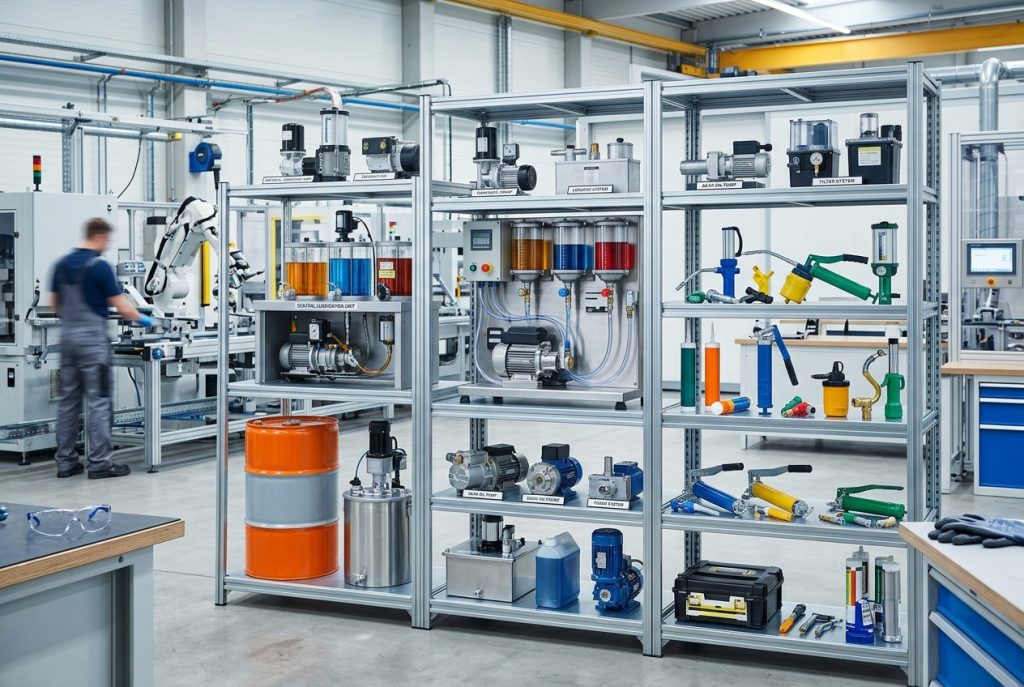
Introduction: The Engineering Backbone of Modern Industry
In modern industrial operations, machinery reliability depends not only on the quality of equipment but also on how effectively it is maintained during operation. One of the most critical but often overlooked components of maintenance engineering is lubrication system design and automation.
Industrial machines operate under extreme conditions:
- Continuous motion cycles
- Heavy mechanical loads
- High temperature environments
- Exposure to dust, moisture, and chemicals
Without a controlled lubrication system, even the most advanced machinery will experience:
- Bearing failure
- Gear wear
- Hydraulic inefficiency
- Increased energy consumption
- Unexpected downtime
To solve these challenges, modern industries rely on automated lubrication equipment systems, including centralized lubrication, progressive systems, oil circulation systems, and automated grease distribution networks.
The FOVAC lubrication equipment ecosystem is designed to support these needs by integrating lubrication delivery, monitoring, and system control into a unified industrial maintenance architecture.
Understanding Lubrication Equipment Systems in Industry
Lubrication equipment systems are engineered solutions that automatically deliver controlled quantities of oil or grease to multiple lubrication points within machinery.
Core Purpose of Lubrication Systems
The primary objectives include:
- Ensuring consistent lubrication delivery
- Reducing manual maintenance intervention
- Preventing lubrication-related failures
- Improving machine efficiency
- Extending equipment lifespan
Why Manual Lubrication Is No Longer Enough
Traditional manual lubrication methods present several limitations:
1. Inconsistent Lubrication
Human error leads to:
- Over-lubrication
- Under-lubrication
- Missed lubrication points
2. Safety Risks
Technicians may need to access moving machinery, increasing risk of injury.
3. Downtime Issues
Machines must often be stopped during manual servicing.
4. Contamination Risks
Manual handling can introduce dust, dirt, or moisture into systems.
Modern industrial environments require automated precision lubrication systems instead.
Types of Industrial Lubrication Equipment Systems
Industrial lubrication systems are typically categorized based on delivery method and system architecture.
1. Centralized Lubrication Systems
Centralized systems distribute lubricant from a single pump to multiple points across machinery.
How It Works
- A central pump supplies lubricant
- Distribution lines carry lubricant to valves
- Metering devices control exact quantity
- Lubricant is delivered at scheduled intervals
Key Benefits
- Uniform lubrication distribution
- Reduced maintenance labor
- Improved machine reliability
- Easy system monitoring
Industrial Applications
- Manufacturing lines
- Conveyor systems
- Heavy machinery
- Automated production plants
2. Progressive Lubrication Systems
Progressive systems distribute lubricant in a sequential cycle through metering blocks.
Working Principle
- Pump activates system
- Lubricant flows through divider valves
- Each outlet receives measured lubricant
- Cycle continues until all points are serviced
Advantages
- Precise lubricant distribution
- Easy blockage detection
- Scalable for multiple lubrication points
- Suitable for complex machinery
Use Cases
- Construction equipment
- Mining machinery
- Industrial production lines
3. Dual-Line Lubrication Systems
Dual-line systems use two alternating main supply lines.
Operation Process
- One line pressurizes lubricant
- The other line releases pressure
- Lubricant is distributed alternately
Advantages
- Suitable for large industrial systems
- Supports long-distance lubrication
- Handles high lubrication point counts
4. Multi-Line Lubrication Systems
Each lubrication point has a dedicated line from the pump.
Benefits
- Maximum control per lubrication point
- High system redundancy
- Reliable performance in heavy industries
5. Oil Circulation Systems
Oil circulation systems continuously circulate lubricant through machinery.
Key Functions
- Lubrication
- Cooling
- Contaminant removal
Applications
- High-speed bearings
- Gear systems
- CNC machinery
- Turbines
6. Single-Line Lubrication Systems
A single main line distributes lubricant to multiple injectors.
Features
- Simple system architecture
- Reliable operation
- Suitable for medium-sized machines
FOVAC Lubrication Equipment Engineering Approach
The FOVAC lubrication system design philosophy focuses on precision, automation, and system reliability.
1. Automated Lubricant Delivery
FOVAC systems are designed to deliver:
- Timed lubrication cycles
- Sensor-based activation
- PLC-controlled operation
- Adjustable flow output
2. High-Pressure Pump Technology
Industrial pumps are engineered for:
- Stable pressure output
- Long-distance lubrication delivery
- Continuous operation cycles
- Multi-point distribution
3. Metering and Control Systems
Lubrication accuracy is achieved using:
- Progressive divider blocks
- Electronic controllers
- Flow regulators
- Pressure monitoring devices
4. System Monitoring Capability
Modern lubrication systems include:
- Fault detection sensors
- Low-level lubricant alerts
- Pressure monitoring
- Cycle completion feedback
Industrial Lubrication Equipment Components
A complete lubrication system typically includes:
1. Pump Units
The heart of the system, responsible for lubricant movement.
2. Reservoir Tanks
Store oil or grease for system distribution.
3. Distribution Lines
Transport lubricant across machinery.
4. Metering Devices
Control exact lubricant volume per point.
5. Control Units
Manage timing, pressure, and system cycles.
6. Sensors
Monitor system performance and detect faults.
Industrial Applications of Lubrication Equipment Systems
Manufacturing Industry
- Conveyor systems
- Automated assembly lines
- Robotics systems
Heavy Engineering
- Crushers
- Mills
- Excavators
- Steel processing equipment
Automotive Industry
- Assembly machines
- Press systems
- Conveyor systems
Oil & Gas Industry
- Pumps
- Compressors
- Drilling rigs
- Refinery systems
Marine Industry
- Deck machinery
- Winches
- Engine systems
Challenges in Industrial Lubrication Systems
1. High Load Conditions
Equipment operating under heavy loads requires precise lubrication timing.
2. Harsh Environments
Dust, moisture, and corrosion can affect system performance.
3. System Blockages
Small blockages can interrupt lubrication cycles.
4. Pressure Imbalance
Uneven distribution may affect machine reliability.
How FOVAC Lubrication Systems Solve These Challenges
1. Stable Pressure Regulation
Ensures uniform lubricant distribution.
2. Blockage Detection Systems
Allows early identification of flow issues.
3. Durable Material Construction
Designed for industrial corrosion resistance.
4. Automated Cycle Control
Reduces human error and improves consistency.
5. Scalable Architecture
Supports expansion across multiple machines.
Benefits of Automated Lubrication Equipment Systems
1. Reduced Machine Downtime
Continuous lubrication prevents failure.
2. Lower Maintenance Cost
Reduces manual labor requirements.
3. Increased Equipment Lifespan
Minimizes wear and tear.
4. Improved Safety
Reduces human exposure to machinery hazards.
5. Higher Operational Efficiency
Machines operate at optimal performance levels.
Maintenance Strategy Integration
Lubrication systems are part of broader maintenance strategies:
Preventive Maintenance
- Scheduled lubrication cycles
- System inspections
- Oil level monitoring
Corrective Maintenance
- Repair of blocked lines
- Pump replacement
- Valve servicing
Predictive Maintenance
- Sensor-based monitoring
- Data-driven lubrication cycles
- Condition-based servicing
Future of Industrial Lubrication Systems
Modern lubrication systems are evolving toward:
- IoT-enabled monitoring
- AI-based predictive lubrication
- Fully automated smart factories
- Energy-efficient lubrication systems
FOVAC systems align with this evolution by supporting automation-ready lubrication infrastructure.
Frequently Asked Questions (FAQ)
1. What is a lubrication equipment system?
It is an automated system that delivers oil or grease to machinery to reduce friction and wear.
2. What industries use lubrication systems?
Manufacturing, automotive, mining, marine, oil and gas, and heavy engineering industries.
3. What is the benefit of centralized lubrication?
It ensures consistent lubrication to all machine points from a single system.
4. How does a progressive lubrication system work?
It distributes lubricant sequentially through metering blocks to each lubrication point.
5. Can lubrication systems reduce downtime?
Yes, automated lubrication reduces breakdowns caused by friction and wear.
6. What happens if lubrication is not maintained?
Machines may overheat, wear out quickly, or fail completely.
7. Are lubrication systems customizable?
Yes, systems can be designed based on machine size, lubrication points, and load conditions.
Conclusion: The Role of Lubrication Systems in Industrial Reliability
Lubrication equipment systems are a critical foundation of modern industrial engineering. They ensure machines operate smoothly, safely, and efficiently under demanding conditions.
The FOVAC lubrication system ecosystem provides a structured approach to industrial lubrication by combining:
- Automated delivery systems
- Precision metering technology
- Pressure-controlled distribution
- Real-time monitoring capability
This results in improved machine reliability, reduced maintenance costs, and higher operational efficiency across industries.
In today’s industrial landscape, lubrication is no longer a manual task—it is a fully engineered automation system that defines production success.