
FDA Approved Grease in Kuala Lumpur & Selangor: A Complete Guide for Food Manufacturers

What is FDA approved grease and why is it required?
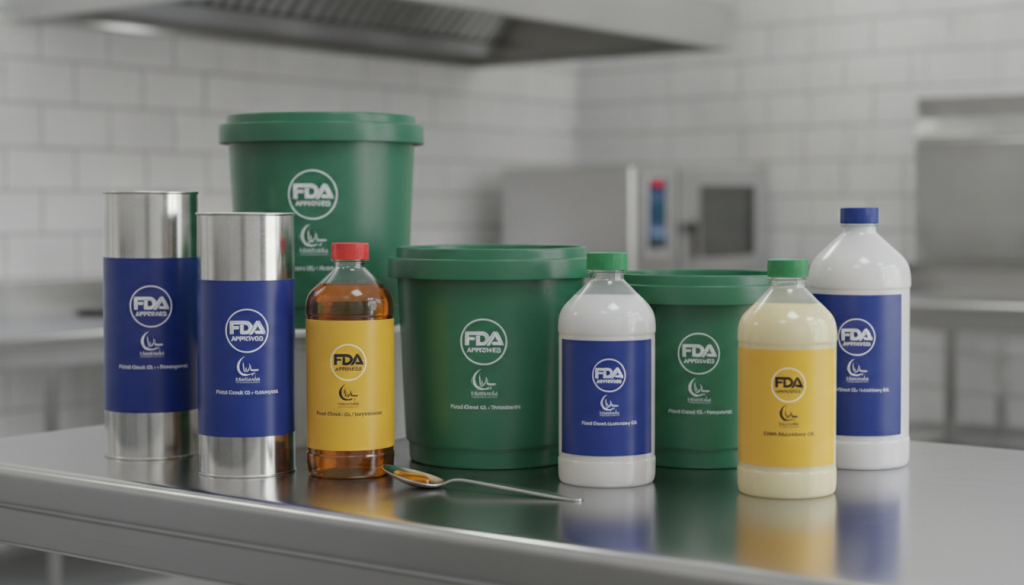
FDA‑approved grease is a lubricant formulated with food‑safe ingredients that meet U.S. FDA standards for incidental contact. It protects your products from chemical contamination, ensures regulatory compliance, and supports export readiness by meeting international safety benchmarks. Manufacturers in Kuala Lumpur and Selangor use it to meet both local and global food safety regulations, reducing recall risk and safeguarding consumer health.
- Regulatory Compliance: Meets international safety benchmarks.
- Risk Mitigation: Reduces recall risk.
- Equipment Longevity: Withstands high temperatures and pressures.
- Consumer Trust: Verifiable safety for audits.
How do you identify high‑quality food‑safe grease?
Identify high‑quality food‑safe grease by verifying NSF H1 certification, temperature stability, viscosity index, and water resistance. These parameters ensure the lubricant can withstand your machinery’s operating conditions and remain safe for incidental food contact. Additionally, review the technical data sheet for compliance with local Malaysian food safety standards and confirm the product’s shelf life under typical storage conditions.
- NSF H1 Certification: Indicates suitability for incidental food contact.
- Temperature Stability: Must cover your operating range (e.g., –20 °C to 200 °C).
- Viscosity Index: Maintains film thickness under varying loads.
- Water Resistance: Essential for wash‑down environments.
Where can you source FDA approved grease in Kuala Lumpur and Selangor?
In the Klang Valley, you can source FDA‑approved grease from local industrial chemical suppliers and lubricant distributors in Shah Alam, Petaling Jaya, and Subang Jaya. Choosing a nearby supplier ensures faster delivery, technical support, and easier compliance verification. These distributors typically provide certificates of analysis, NSF registration numbers, and can advise on product selection based on your machinery’s operating parameters.
- Verify Documentation: Request Certificate of Analysis and NSF registration.
- Consult Technical Experts: Ensure compatibility with your equipment.
- Test for Compatibility: Verify seals and components.
- Check Lead Times: Prevent production downtime.
Frequently Asked Questions
What is the difference between NSF H1 and H2 grease?
NSF H1 grease is approved for incidental food contact, meaning it is safe if small amounts touch food. NSF H2 grease is only for non‑food contact applications where contamination is unlikely.
Is FDA approval mandatory for food production in Malaysia?
While Malaysian authorities like the Ministry of Health have their own standards, FDA/NSF certification is often mandatory for manufacturers looking to export products to international markets.
Can I use regular grease in a food production line?
No. Regular grease contains chemicals that are toxic if ingested. Using non‑food‑grade lubricants in food‑contact areas can lead to severe health risks and legal penalties.