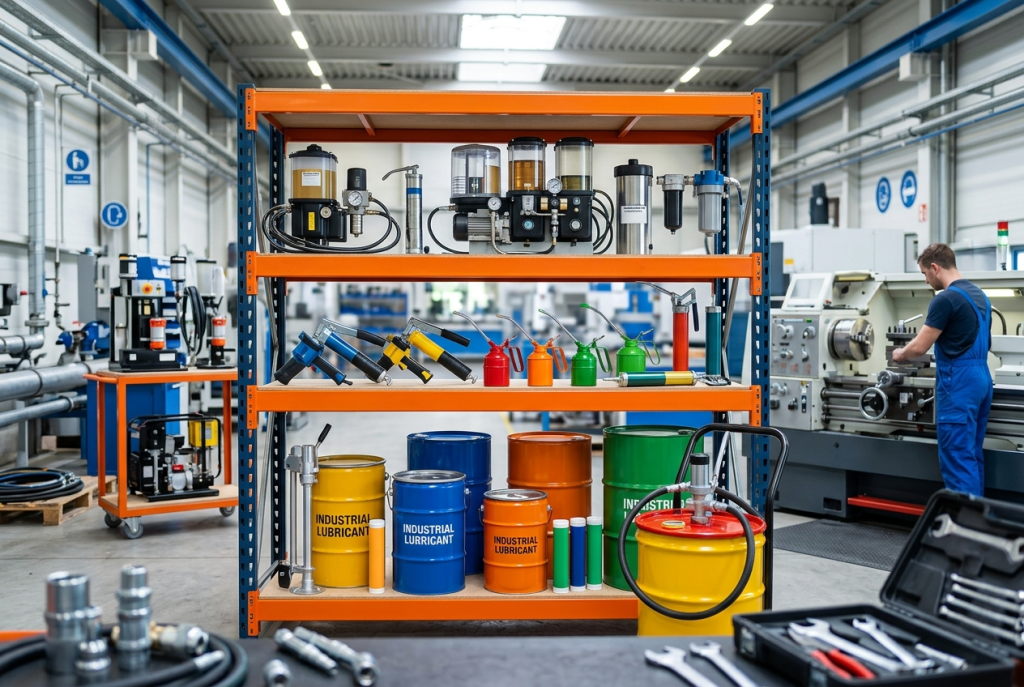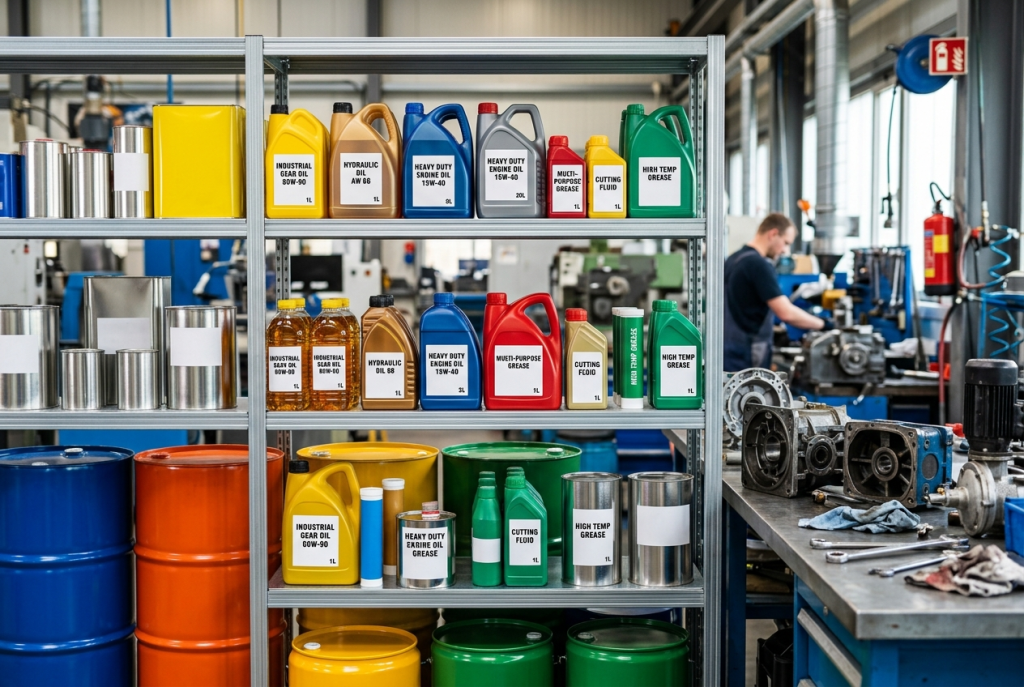


FOVAC Food Grade Lubricants & Industrial Grease Solutions for Safe Operations

Introduction: Where Safety Meets Industrial Performance
In modern industrial environments, lubrication is not only about reducing friction and improving machine efficiency. In many industries—especially food processing, beverage manufacturing, pharmaceutical production, and packaging—lubricants must also meet strict safety and contamination control standards.
Traditional industrial greases and oils are engineered for performance under extreme mechanical stress. However, when machinery operates in environments where there is a possibility of incidental food contact or hygiene sensitivity, a different class of lubrication is required: food grade lubricants and certified safe greases.
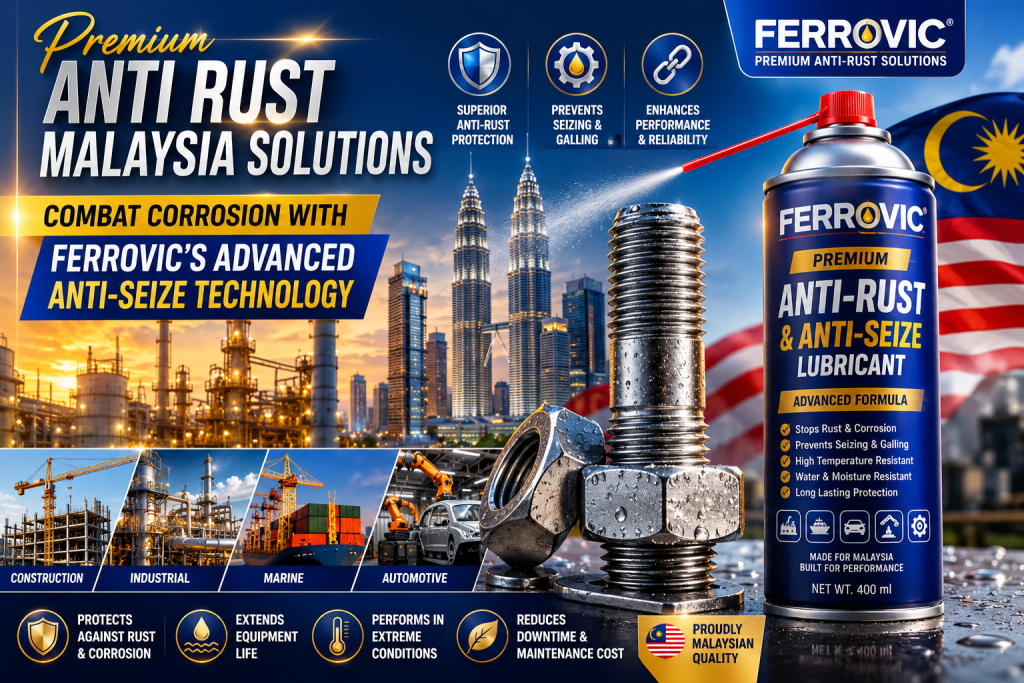
The FOVAC lubrication system developed under Ferrovic’s industrial chemical engineering portfolio addresses this dual requirement:
✔ High-performance mechanical lubrication
✔ Compliance for food-sensitive environments
✔ Stability under heat, moisture, and washdown conditions
✔ Reduced contamination risk in production systems
This makes it suitable for industries where machine efficiency and product safety must coexist.
Understanding Food Grade Lubrication in Industrial Systems
Food grade lubricants are specially formulated lubricants designed for use in environments where accidental contact with food products may occur.
Why Food Grade Lubricants Are Necessary
In food manufacturing plants, lubrication is still essential for:
- Conveyor systems
- Filling machines
- Packaging equipment
- Mixing and blending machines
- Bottling and sealing lines
However, using standard industrial grease poses risks such as:
- Chemical contamination
- Product safety violations
- Equipment shutdown due to compliance issues
- Product recalls and financial losses
Food grade lubricants eliminate these risks by using safe, non-toxic, and regulated chemical components.
Key Requirements for Food Safe Lubrication Systems
A lubricant used in food-related environments must meet strict criteria:
1. Non-Toxic Composition
The lubricant must be made from base oils and additives that are safe for incidental contact.
2. Stability Under Temperature Variation
Food processing environments often involve:
- High-temperature cooking systems
- Cold storage operations
- Steam cleaning cycles
Lubricants must remain stable under these conditions.
3. Resistance to Water and Washdown
Food facilities undergo frequent cleaning using:
- Hot water
- Steam pressure
- Detergents and sanitizers
Lubricants must not wash away easily.
4. Odorless and Neutral Behavior
Any lubricant used near food processing areas must not:
- Produce odors
- Affect taste or smell
- Contaminate air circulation systems
5. Long-Lasting Lubrication Performance
Even under safety constraints, lubrication must still:
- Reduce friction
- Prevent wear
- Extend equipment life
FOVAC Food Grade Lubricant Engineering Approach
The FOVAC system is designed with a dual engineering philosophy:
A. Safety-First Chemistry
FOVAC food-safe lubricants are formulated using:
- High purity base oils
- Non-toxic additive systems
- Controlled viscosity compounds
- Stable oxidation-resistant formulations
This ensures compatibility with regulated environments.
B. Industrial Performance Optimization
Despite safety constraints, performance remains critical:
- High load-bearing capability
- Excellent surface adhesion
- Resistance to mechanical shear
- Reduced friction under continuous operation
Industrial Grease: The Backbone of Heavy Machinery Protection
Industrial grease is one of the most widely used lubrication systems in mechanical engineering.
What is Industrial Grease?
Grease is a semi-solid lubricant composed of:
- Base oil
- Thickening agent
- Performance additives
Unlike liquid oil, grease stays in place and provides long-term protection.
Functions of Industrial Grease
Grease performs several key roles:
- Reduces metal-to-metal contact
- Prevents wear and abrasion
- Seals out dust and moisture
- Supports heavy load applications
- Extends lubrication intervals
Types of Food Grade Grease Applications
Food-safe grease is used in multiple areas within production systems.
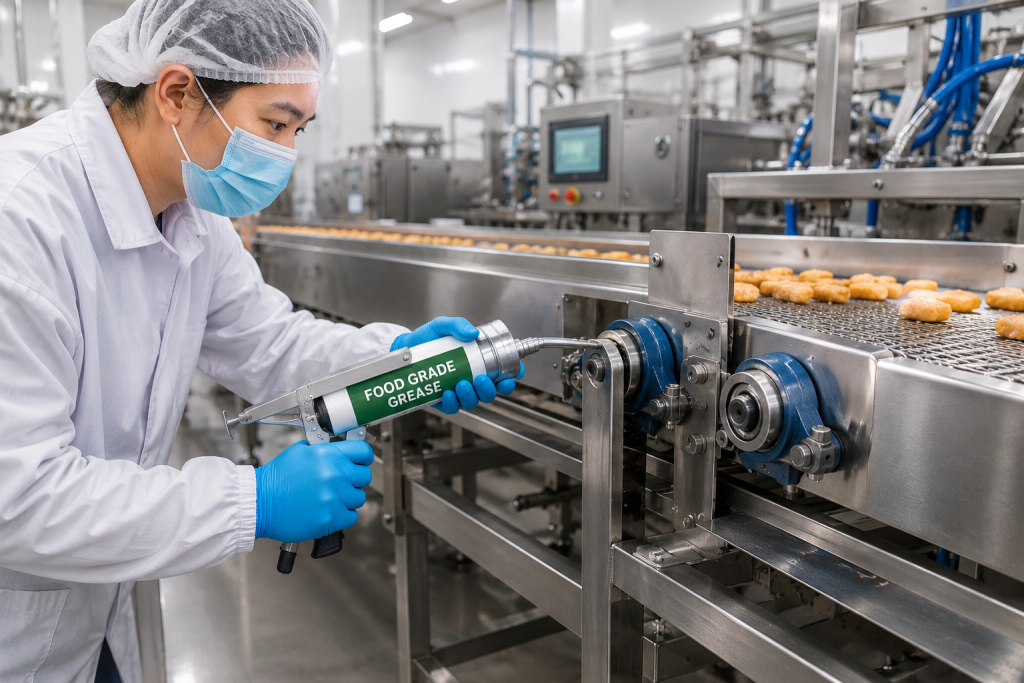
1. Conveyor Bearings
- Continuous motion systems
- Exposure to washdown environments
- High humidity conditions
2. Packaging Machinery
- Sealing arms
- Cutting blades
- Rotating rollers
3. Mixing and Processing Equipment
- Food mixers
- Blending machines
- Dough processing systems
4. Bottling and Filling Systems
- High-speed production lines
- Precision mechanical systems
- Valve control mechanisms
FOVAC Food Grade Grease Performance Characteristics
FOVAC greases are engineered to deliver:
1. High Mechanical Stability
Resists breakdown under:
- Load pressure
- Continuous movement
- Mechanical vibration
2. Water Resistance
Maintains lubrication film even under:
- Steam cleaning
- High-pressure washing
- Humid environments
3. Thermal Stability
Performs under:
- High-temperature baking systems
- Cold storage freezing environments
- Rapid temperature changes
4. Contamination Safety Design
Formulated to minimize:
- Chemical migration
- Product contamination risk
- Odor or taste interference
Industrial Challenges in Food Production Lubrication
Food manufacturing presents unique mechanical challenges.
1. Frequent Cleaning Cycles
Equipment is washed multiple times daily, which removes conventional lubricants.
2. Continuous Operation
Production lines run:
- 24/7 in many facilities
- With minimal downtime
- Under high mechanical stress
3. Hygiene Compliance Requirements
Strict standards require:
- Safe materials
- Controlled chemical usage
- Traceability of maintenance materials
4. Equipment Complexity
Modern production systems involve:
- High-speed automation
- Precision robotics
- Multi-stage processing systems
How FOVAC Solves These Industrial Challenges
FOVAC lubrication systems address these issues through:
1. Enhanced Adhesion Technology
Lubricants stay on surfaces longer even after cleaning cycles.
2. Reduced Reapplication Frequency
Longer lubrication intervals reduce maintenance workload.
3. Stability in Harsh Cleaning Conditions
Maintains performance despite exposure to:
- Alkaline cleaners
- Hot water
- Sanitizing chemicals
4. Compatibility with Mixed Industrial Systems
Works in both:
- Food contact zones
- Non-contact mechanical areas
Food Safety Compliance Considerations in Lubrication
Industrial facilities must ensure that all maintenance materials comply with food safety standards.
Key considerations include:
- Material toxicity levels
- Chemical stability
- Risk of migration into products
- Regulatory classification for incidental contact
FOVAC food-grade lubrication systems are designed to align with these operational requirements.
Benefits of Using Food Grade Lubricants in Industry
1. Improved Safety Assurance
Reduces risk of contamination in production environments.
2. Operational Efficiency
Machines run smoothly with fewer interruptions.
3. Lower Maintenance Costs
Longer lubrication intervals reduce servicing frequency.
4. Equipment Longevity
Reduced wear extends machine lifespan.
5. Compliance Readiness
Supports operational standards in regulated industries.
Integration with Industrial Maintenance Strategy
Food-grade lubrication should be part of a structured maintenance system:
Preventive Maintenance
- Scheduled grease application
- Bearing lubrication cycles
- Conveyor system servicing
Corrective Maintenance
- Emergency lubrication during breakdown
- Replacement of degraded grease
- Cleaning and reapplication
Predictive Maintenance
- Monitoring lubrication condition
- Vibration and heat detection
- Performance tracking
Industries That Rely on Food Grade Lubrication
Food Processing Industry
- Meat processing
- Dairy production
- Bakery systems
Beverage Industry
- Bottling plants
- Filling systems
- Packaging lines
Pharmaceutical Manufacturing
- Tablet production machinery
- Mixing systems
- Packaging equipment
Cosmetics Industry
- Cream production systems
- Filling and sealing machines
Packaging Industry
- Conveyor systems
- Automation equipment
Environmental and Operational Impact
Modern industrial lubrication systems are expected to support sustainability.
FOVAC food-grade lubrication contributes to:
- Reduced lubricant waste
- Extended machine efficiency cycles
- Lower downtime and energy loss
- Improved operational reliability
Frequently Asked Questions (FAQ)
1. What is food grade lubricant used for?
It is used in machinery where accidental contact with food may occur, ensuring safety and compliance.
2. Is food grade grease safe for all food processing machines?
Yes, it is designed for equipment in food production environments, especially where hygiene is critical.
3. How often should food grade grease be applied?
Application frequency depends on machine load, cleaning cycles, and operating conditions.
4. Can food grade lubricants handle high temperatures?
Yes, industrial-grade formulations are designed for both high and low temperature stability.
5. What is the difference between food grade grease and regular grease?
Food grade grease is formulated with non-toxic ingredients suitable for incidental food contact.
6. Does frequent washing remove food grade lubricants?
High-quality formulations are designed to resist water and cleaning agents better than standard lubricants.
7. Why is lubrication important in food production systems?
It ensures machine efficiency, reduces wear, and maintains continuous production without breakdowns.
Conclusion: Balancing Safety and Performance in Industrial Lubrication
In modern industrial systems, especially within food and beverage production environments, lubrication must achieve a delicate balance between mechanical performance and safety compliance.
The FOVAC food grade lubrication and grease system is designed to support this balance by providing:
- Reliable mechanical protection
- Safe formulation for sensitive environments
- Resistance to cleaning and washdown conditions
- Long-term operational stability
By integrating food-safe lubrication systems into maintenance strategies, industries can achieve:
- Higher production reliability
- Lower operational risks
- Improved equipment lifespan
- Strong compliance with safety requirements
Ultimately, industrial efficiency is no longer just about power and performance—it is about safe, sustainable, and intelligent maintenance engineering.