

What Is the Purpose of Lubrication in Industrial Applications?
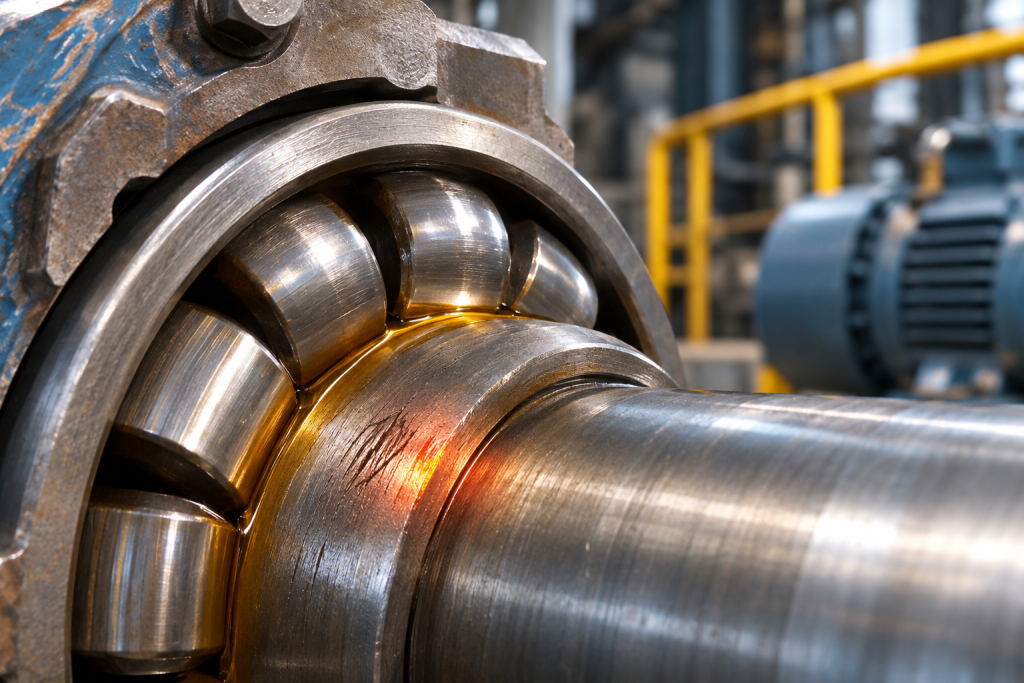
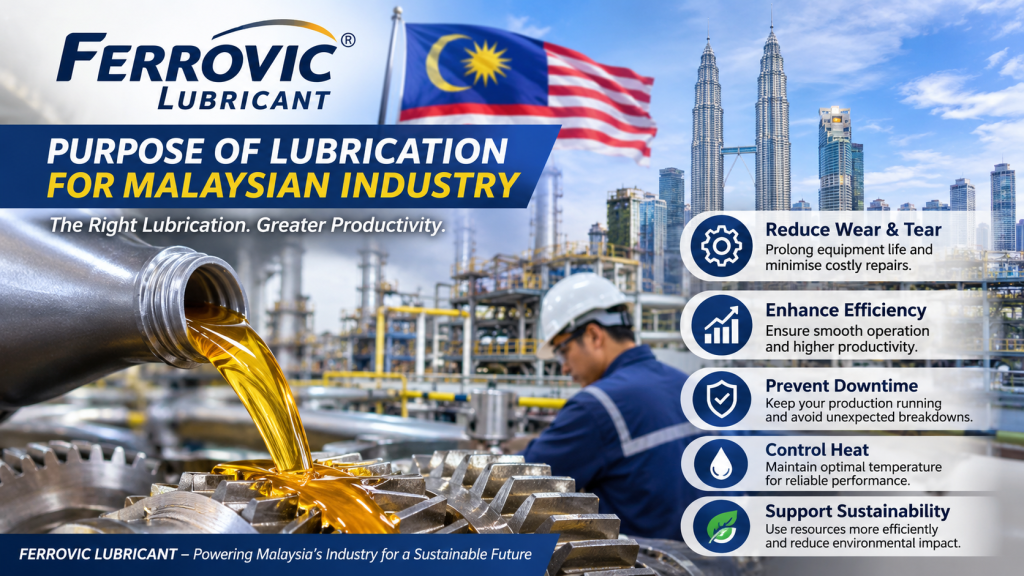
The purpose of bearing lubrication is to prevent direct metallic contact between rolling and sliding elements by forming a thin oil or grease film on contact surfaces. In rolling bearings specifically, lubrication delivers five critical advantages: reduction of friction and wear, dissipation of friction heat, prolonged bearing life, prevention of rust, and protection against harmful elements. For Malaysian industrial operations in the Klang Valley, selecting the correct lubrication method matched to service conditions is essential to maximise asset uptime.
A quality lubricant must be selected, applied in the proper quantity, and contained within a bearing housing designed to exclude foreign matter and prevent leakage. According to the Society of Tribologists and Lubrication Engineers (STLE) glossary of tribology terms, effective lubrication depends on the interplay of surface chemistry, film thickness, and operating parameters.
How Does Lubrication Reduce Friction and Wear in Mechanical Systems?
Lubrication minimises friction loss by maintaining a continuous fluid film between mating surfaces, eliminating asperity-to-asperity contact. At extremely low lubricant volumes, direct metallic contact causes abrasion and seizing. At optimal volume, friction reaches its minimum and bearing temperature stays low. Excess lubricant, however, increases churning losses and heat buildup, counteracting the cooling benefit.
The relationship between oil volume, friction loss, and temperature follows a predictable curve:
- Zone A (extremely low oil): Metallic contact; abrasion and seizing occur.
- Zone B (thin film): Minimal friction; low bearing temperature.
- Zone C (balanced volume): Heat generation equals heat dissipation; stable operating temperature.
- Zone D (excess oil): Temperature rises at a fixed rate as churning dominates.
- Zone E (high-volume circulation): Cooling predominates; temperature decreases again.
For mechanical and maintenance engineers in Malaysian Business Industrial Parks, operating bearings in Zone C represents the optimal balance between lubrication effectiveness and energy efficiency.
What Are the Main Lubrication Methods for Industrial Bearings?
Bearing lubrication methods divide into two primary categories: grease lubrication and oil lubrication. Each method carries distinct advantages depending on speed, load, sealing requirements, and environmental exposure. The correct method must be matched to the specific service condition to deliver the required function.
When Should You Use Grease Lubrication?
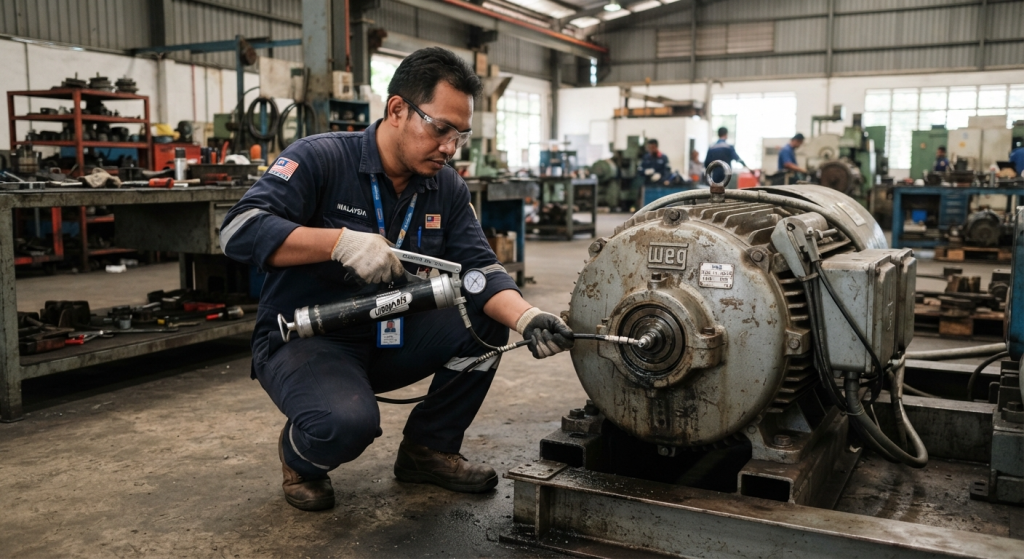
Grease lubrication is the most widely used method for rolling bearings because it is simple to handle, requires only basic sealing, and provides long-interval protection. It is the default choice for sealed or shielded bearings and for unsealed bearings where periodic replenishment is practical.
Key characteristics of grease lubrication:
- Handling: Very good; minimal infrastructure required.
- Reliability: Good; self-contained within the bearing cavity.
- Cooling effect: Fair; limited convective heat transfer.
- Seal structure: Poor (simpler seals suffice).
- Power loss: Low to moderate.
- High-speed rotation: Limited without circulation.
Grease is the preferred method for general-purpose machinery, conveyor systems, and pump bearings common in Malaysian manufacturing plants.
When Should You Use Oil Lubrication?
Oil lubrication suits applications where bearing-generated heat or externally applied heat must be actively carried away and dissipated. It is the standard for high-speed spindles, gas turbines, machine tools, and continuously operating industrial equipment in the Klang Valley’s manufacturing corridors.
Seven primary oil lubrication methods exist:
- Oil bath lubrication – Bearing partially submerged; oil level at the centre of the lowest rolling element. Best for low-to-moderate speeds.
- Drip lubrication – Controlled oil drips at a few drops per minute; suitable for high-speed, light-to-moderate loads.
- Oil mist lubrication – Pressurised air atomises oil before it passes through the bearing; ideal for very high speeds.
- Oil jet lubrication – High-pressure oil injected directly into the bearing; used in jet engines, gas turbines, and severe-duty applications.
- Oil spray lubrication – An impeller on the shaft sprays oil onto the bearing; works at considerably high speeds.
- Circulating lubrication – Pressurised oil flows through inlets and outlets on opposite sides; allows integrated coolers and filters.
- Air-oil lubrication – Measured oil doses delivered at intervals with compressed air cooling; keeps the working environment clean.
What Are the Key Components of a Lubricating Grease?
Lubricating grease is a semi-solid lubricant composed of three core components: a base oil, a thickening agent, and additives. The base oil determines viscosity, temperature range, and load-carrying capacity. The thickener maintains the semi-solid structure. Additives provide extreme-pressure protection, oxidation stability, and corrosion resistance.
Base Oil Selection
- Mineral oil base: Standard for general-duty applications; operating range typically −30 °C to +130 °C.
- Diester / Tetraester base: Superior low-temperature performance (down to −50 °C) and high-temperature stability (up to +200 °C).
- Silicone oil base: Wide range (−50 °C to +160 °C); excellent chemical and thermal stability.
- Synthetic hydrocarbon / PAO base: Consistent performance across temperature extremes; low volatility.
- Fluorocarbon / Fluoride oil base: Highest temperature capability (up to +300 °C); used in aerospace and specialised industrial applications.
Thickening Agents
- Metallic soaps: Lithium (most versatile), sodium (poor water resistance), calcium (excellent water resistance), calcium-sodium compound.
- Non-soap / inorganic: Bentonite (bentone), silica gel – superior high-temperature properties.
- Organic / non-metallic: Polyurea, fluorocarbon thickeners – excellent mechanical stability and water resistance.
Additives for Specific Conditions
- EP (extreme-pressure) additives: Required for bearings under heavy or shock loads.
- Oxidation stabilisers: Essential for high-temperature service or long relubrication intervals.
- Rust and corrosion preventives: Critical in Malaysia’s high-humidity tropical climate.
- Anti-wear agents: Protect raceways under boundary-lubrication conditions.
NLGI Consistency Grades for Bearings
| NLGI Grade | 60-Blend Penetration (mm) | Typical Application |
|---|---|---|
| 0 | 400–430 | Centralised greasing systems |
| 1 | 355–385 | Centralised greasing; high-speed applications |
| 2 | 265–295 | General purpose; sealed bearings |
| 3 | 220–250 | General and high-temperature use |
| 4 | 175–205 | Special applications |
For rolling-bearing lubrication in Malaysian industrial settings, NLGI Grade 2 is the most common specification, while Grade 1 suits high-speed or centralised systems and Grade 3 handles elevated temperatures.
How Much Lubricant Should You Apply to a Bearing?
Correct lubricant quantity is as critical as lubricant selection. Over-greasing causes temperature rise, softening, leakage, and accelerated oxidation. Under-greasing leads to boundary contact and premature wear.
Grease Quantity Guidelines
As a rule of thumb:
- Fill the bearing cavity to 30–40% of available space.
- Fill the housing to 30–60% of available space.
- At high speeds or where temperature rise must be minimised, use the lower end of these ranges.
The standard bearing space volume can be calculated using:
V = K × W
Where:
- V = quantity of bearing space (cm³)
- K = bearing space factor (see table below)
- W = mass of bearing (kg)
Bearing Space Factor (K) Values
| Bearing Type | Cage Type | K Value |
|---|---|---|
| Ball bearings | Pressed | 61 |
| Ball bearings | Machined | 50 |
| NU-type cylindrical roller | Pressed | 36 |
| N-type cylindrical roller | Pressed | 55 |
| N-type cylindrical roller | Machined | 37 |
| Tapered roller | Pressed | 46 |
| Spherical roller | Pressed | 35 |
| Spherical roller | Machined | 28 |
Oil Quantity for Forced-Circulation Systems
The required oil flow rate is calculated as:
Q = K × q
Where:
- Q = oil quantity per bearing (cm³/min)
- K = allowable oil temperature-rise factor (1.5 for ΔT 10 °C; 1.0 for 15 °C; 0.75 for 20 °C; 0.6 for 25 °C)
- q = base oil quantity from speed-load diagram (cm³/min)
For general housing applications in industrial parks, multiply the calculated value by 1.5 to 2.0 to account for housing radiation losses and operational variability.
How Do You Select the Right Lubricant for Malaysian Industrial Conditions?
Malaysia’s tropical climate—characterised by ambient temperatures of 28–35 °C, relative humidity above 80%, and monsoon-season water ingress—imposes specific demands on lubricant selection. Mechanical and maintenance engineers in the Klang Valley’s Business Industrial Parks must account for these conditions when specifying lubricants.
Viscosity Selection by Operating Temperature and Speed
| Operating Temp (°C) | dn-Value Range | Normal Load (ISO VG) | Heavy / Shock Load (ISO VG) |
|---|---|---|---|
| 0–60 | Up to 15,000 | 32 / 46 | 46 / 68 |
| 60–100 | 15,000–80,000 | 22 / 32 | 32 / 46 |
| 100–150 | 80,000–150,000 | 22 / 32 | 32 / 46 |
| 150–200 | 150,000–500,000 | 10 / 15 | 32 / 46 |
- Below −30 °C or above 150 °C: Use synthetic oils (diester, silicone, fluorocarbon).
- Normal range: Spindle oil, machine oil, and turbine oil (mineral-based) are widely used.
- Higher speeds: Select lower viscosity grades.
- Heavier loads: Select higher viscosity grades.
Climate-Specific Recommendations for the Klang Valley
- Prioritise greases and oils with superior water resistance (lithium complex, polyurea, or calcium thickeners) to resist monsoon humidity.
- Use oxidation-stabilised formulations where relubrication intervals exceed 6 months.
- Specify EP-rated greases for bearings in heavy-equipment, extrusion, and forging operations.
- For outdoor or semi-outdoor installations, select lubricants with anti-corrosion and rust-preventive additives.
- Consult the manufacturer’s data sheet for brand-specific performance; even within the same grease type, properties vary significantly between formulations.
What Are the Best Practices for Lubrication Maintenance in Industrial Parks?
Effective lubrication maintenance extends bearing life, reduces unplanned downtime, and lowers total cost of ownership. The following practices apply to mechanical and maintenance teams operating in Malaysian industrial environments.
Grease Replenishment Intervals
- The relubrication interval depends on bearing type, bore diameter, rotational speed, operating temperature, and grease grade.
- As a baseline, for every 10 °C increase above 80 °C, shorten the grease interval by a factor of 1/1.5.
- For a deep groove ball bearing 6206 (bore 30 mm) under 2.0 kN radial load at 3,600 rpm, the approximate grease life is 5,500 hours.
- Never mix greases of different brands. If mixing is unavoidable, use greases with the same base oil and thickening agent.
Oil Change Frequency
- Oil bath, ≤ 50 °C: Replace oil once per year.
- Oil bath, 80–100 °C: Replace oil at least every three months.
- Critical equipment: Monitor lubricant efficiency and oil purity (particle count, water content, viscosity) on a scheduled basis to determine replacement timing.
Maintenance Checklist for Malaysian Industrial Sites
- Verify correct grease/oil grade and NLGI consistency at each lubrication point.
- Inspect seals and shields for wear, cracking, or foreign-matter ingress.
- Monitor bearing operating temperature with infrared or contact thermometers; flag readings exceeding 80 °C for review.
- Check for oil or grease leakage at housing interfaces.
- Confirm no water contamination, especially after monsoon-season exposure.
- Record relubrication dates and quantities in the CMMS (Computerised Maintenance Management System).
- Analyse spent lubricant annually for wear-metal particles and oxidation indicators.
- Review lubricant specifications when replacing bearings or modifying operating loads.
Frequently Asked Questions (FAQs)
What is the primary purpose of lubrication in rolling bearings?
The primary purpose is to prevent direct metallic contact between rolling and sliding elements by maintaining a continuous lubricant film. This simultaneously reduces friction, dissipates heat, prevents rust, and protects the bearing from external contaminants.
How much grease should I put in a bearing housing?
Fill the bearing cavity to 30–40% of available space and the housing to 30–60%. Exceeding these ranges causes temperature rise, grease softening, and accelerated oxidation that reduces lubricating efficiency.
What is the difference between grease and oil lubrication for bearings?
Grease lubrication is simpler, requires minimal sealing, and suits general-purpose and medium-speed applications. Oil lubrication provides superior cooling and is necessary for high-speed, high-temperature, or continuously monitored industrial operations.
Which lubricant is best for Malaysia’s hot and humid climate?
Use water-resistant greases (lithium complex or polyurea thickened) with oxidation stabilisers and anti-corrosion additives. For oil-lubricated systems, select ISO VG 32–68 mineral or synthetic oils with high water-separation characteristics.
How often should I relubricate a bearing in a Malaysian industrial park?
Under normal conditions (below 80 °C), follow the manufacturer’s interval chart—typically 3,000 to 10,000 hours depending on speed and load. Shorten the interval by a factor of 1/1.5 for every 10 °C above 80 °C, which is common in tropical ambient conditions.
Can I mix different brands of bearing grease?
No. Mixing greases of different brands usually softens the consistency, lowers the operating temperature range, and can cause thixotropic failure. If mixing is unavoidable, select greases sharing the same base oil and thickening agent.
What oil viscosity should I use for a high-speed spindle in the Klang Valley?
For dn-values above 80,000 at operating temperatures of 60–100 °C, select ISO VG 22 or 32 for normal loads and ISO VG 32 or 46 for heavy or shock loads. Below −30 °C or above 150 °C, switch to synthetic oils such as diester or PAO.
What is solid grease and when should I use it?
Solid grease is lubricating grease bound in an ultra-high-molecular-weight polyethylene matrix that hardens after calcination, preventing leakage under vibration and centrifugal force. It is standard for deep groove ball bearings, self-aligning ball bearings, spherical roller bearings, and needle roller bearings in applications where conventional grease would be expelled.